Inline Filters for PCP Compressors
The number one mistake new PCP compressor buyers make is skipping the filter. This page covers why you need one, the filter I actually recommend, and an important problem with large filters on small compressors that nobody talks about — but you need to know before you fill your first gun.
Why You Need an Inline Filter
Small electric compressors — including the GX Pump units — compress air rapidly and generate heat. That heat evaporates moisture in the ambient air, which then condenses as it cools downstream. Compressor pumps also produce trace amounts of oil vapor. Both get pushed directly into your airgun's reservoir, valve, and regulator if you don't filter them out.
The damage is slow at first. Seals swell and distort. O-rings degrade. Regulators start behaving erratically. Eventually a valve fails mid-fill, or your regulator requires a full rebuild. Filter every fill. Every time. Non-negotiable.
My Recommended Filter
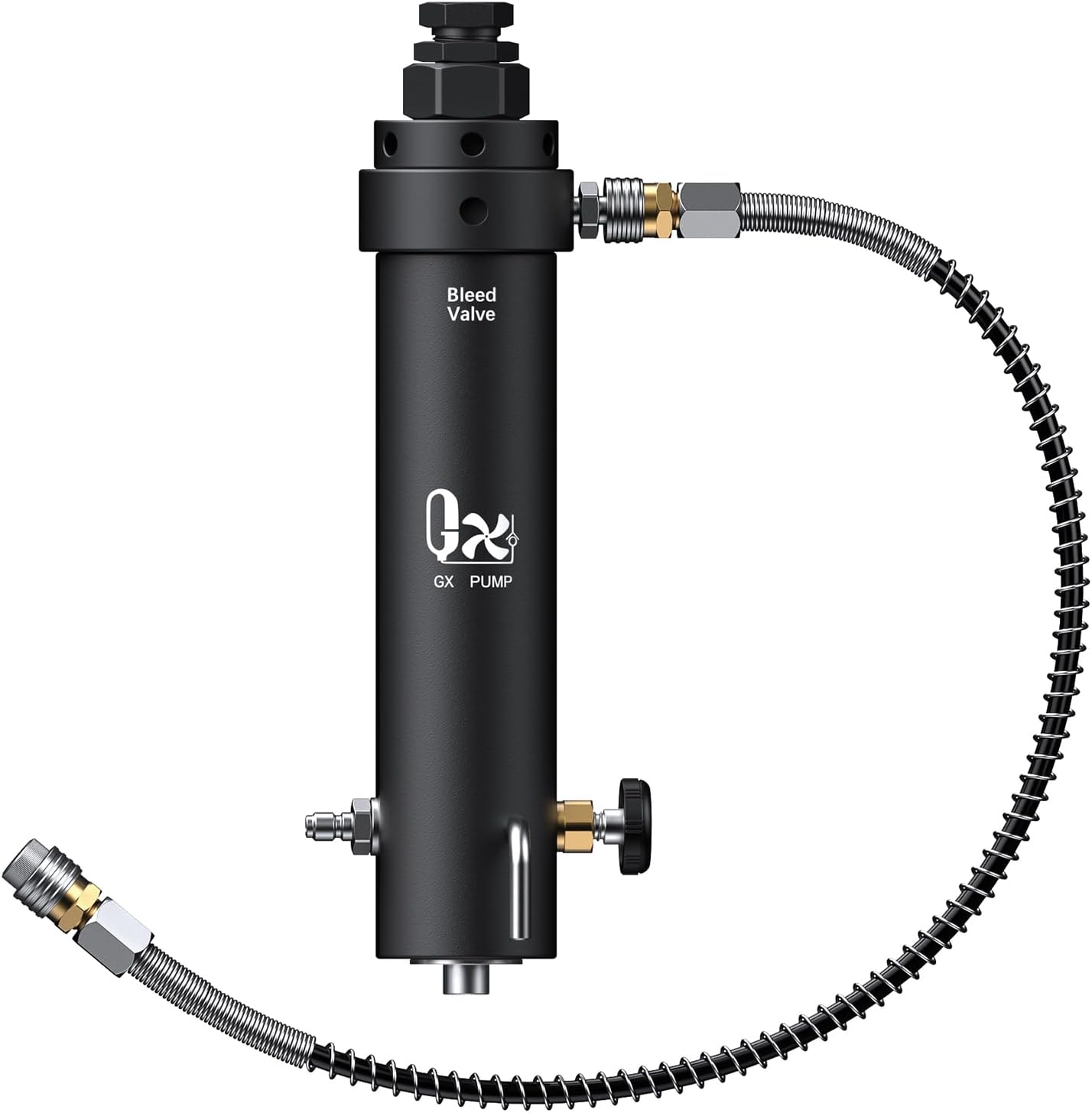
High-Pressure PCP Inline Filter — 5800 PSI Rated
Affiliate link — I earn a small commission at no extra cost to you.
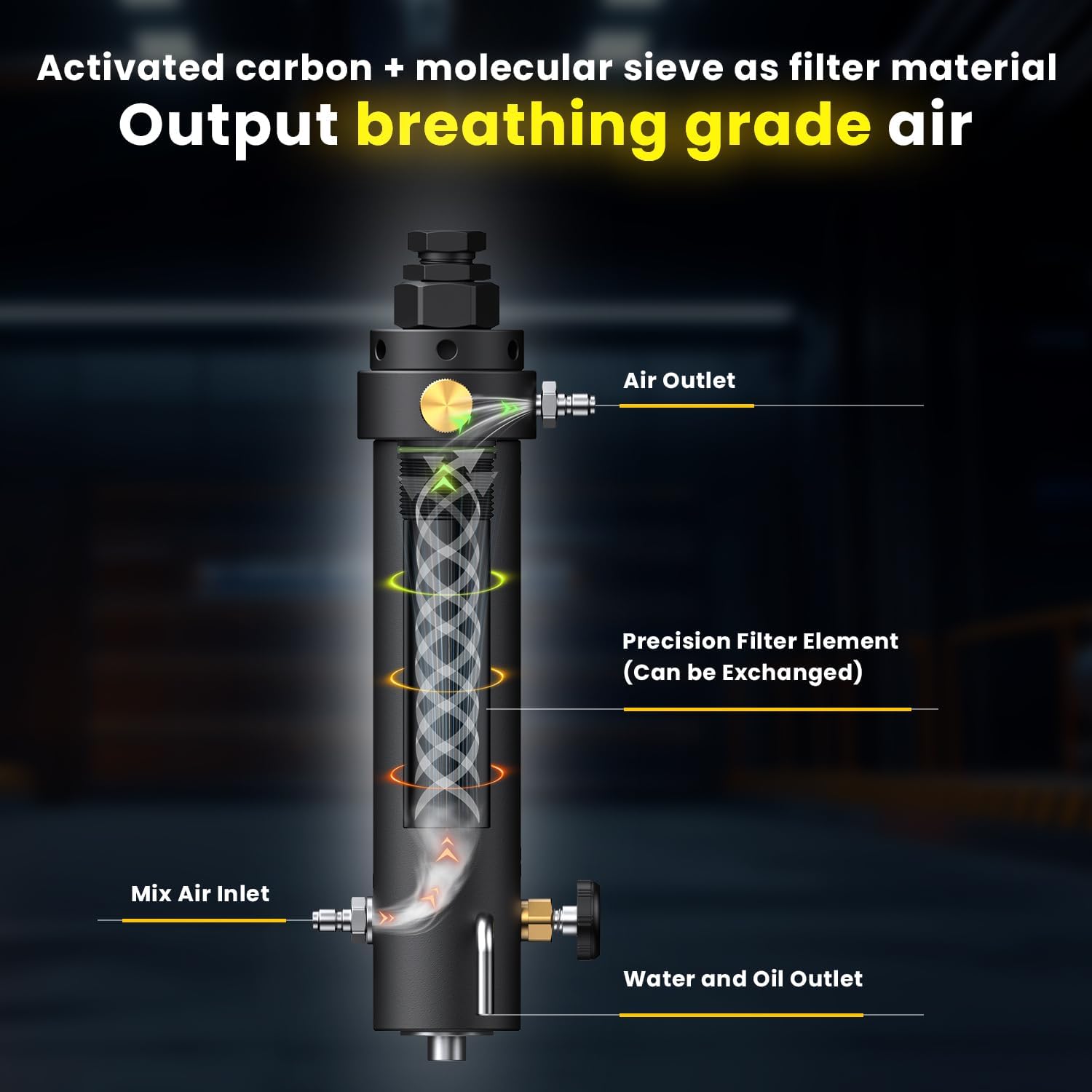
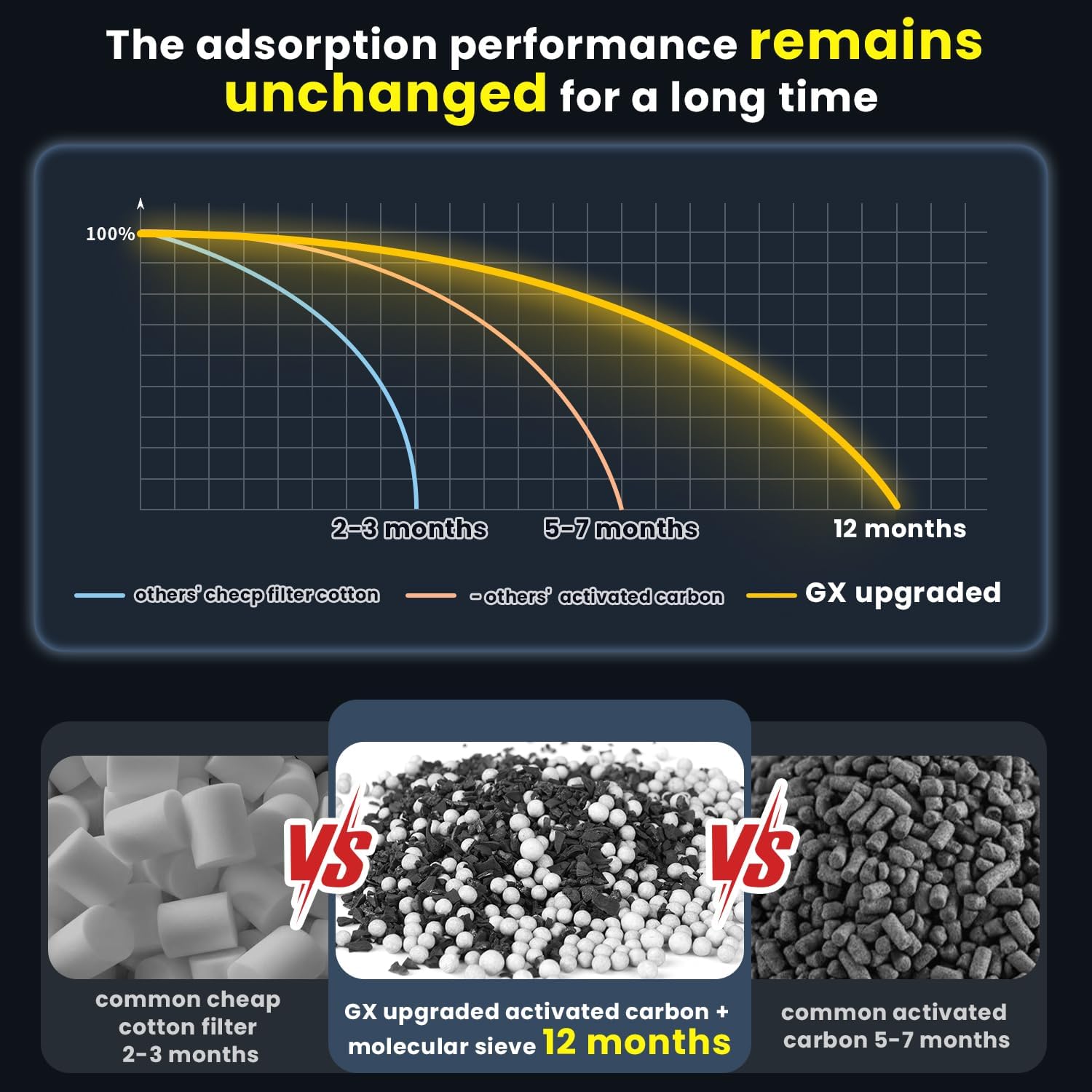
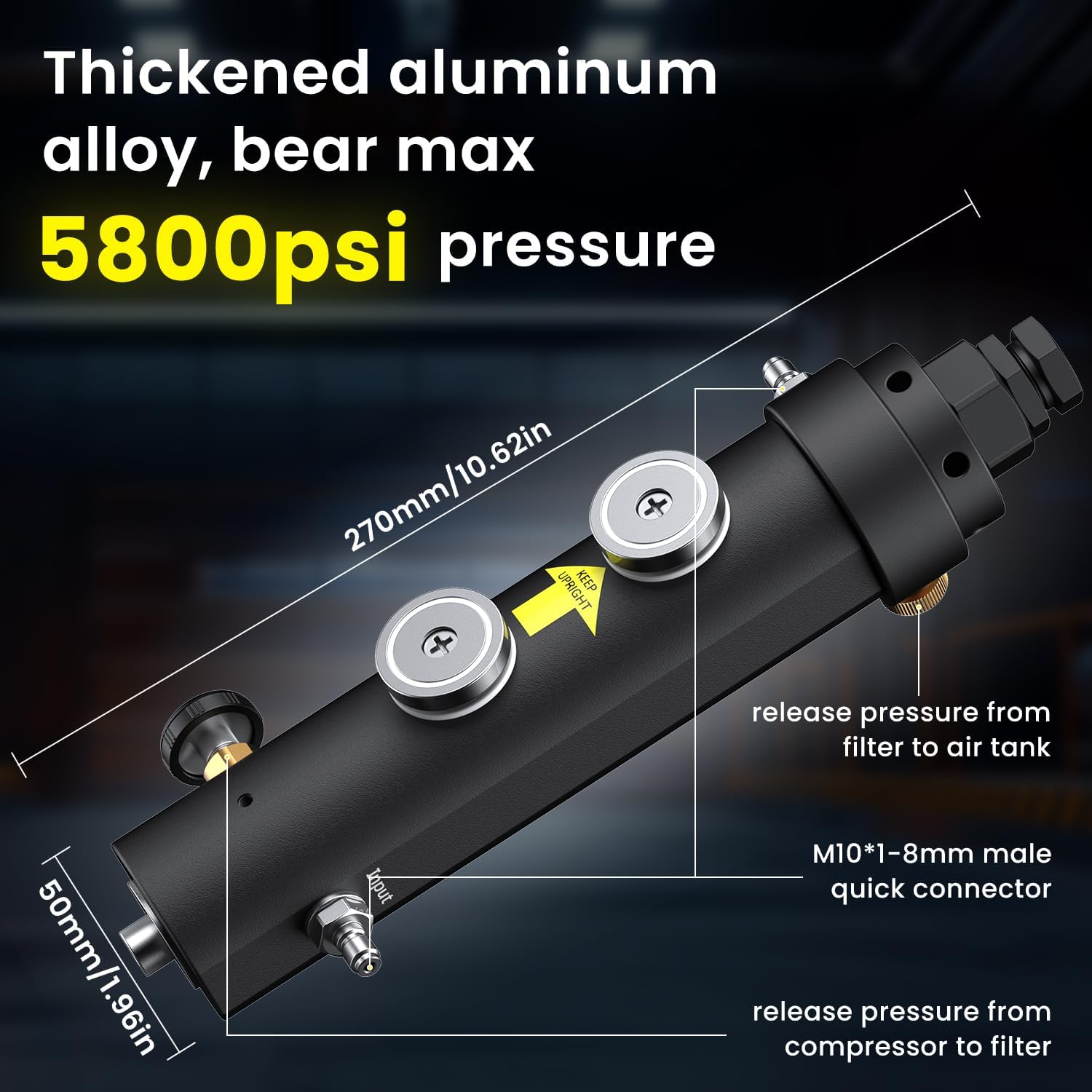
This is the filter I point people to, and here's why it beats the cheap gold ones you see all over Amazon. Most of those bargain filters are not rated anywhere near 5800 PSI. This one is — which means it's actually matched to what the CS4-I produces. That matters. Running a filter beyond its pressure rating is a safety issue, not just a performance issue.
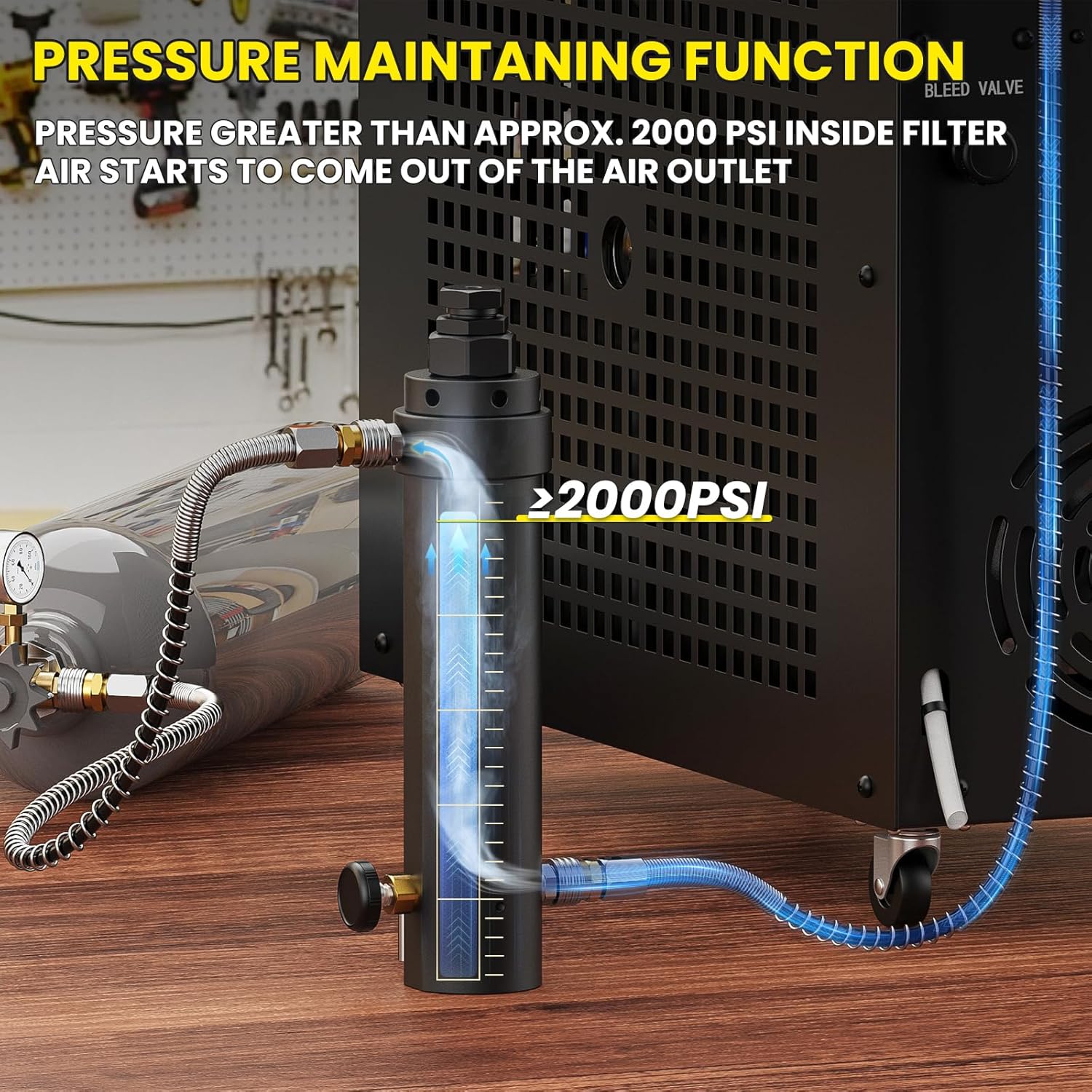
The pressure compensating feature is something most filters at this price point skip entirely. What it means: the filter doesn't allow air to flow through until it reaches a certain pressure. This keeps your fill consistent and protects the desiccant from being blown through at low pressure. Most of the cheap ones let air pass through at any pressure — you're not getting the filtration you think you are on the initial blast.
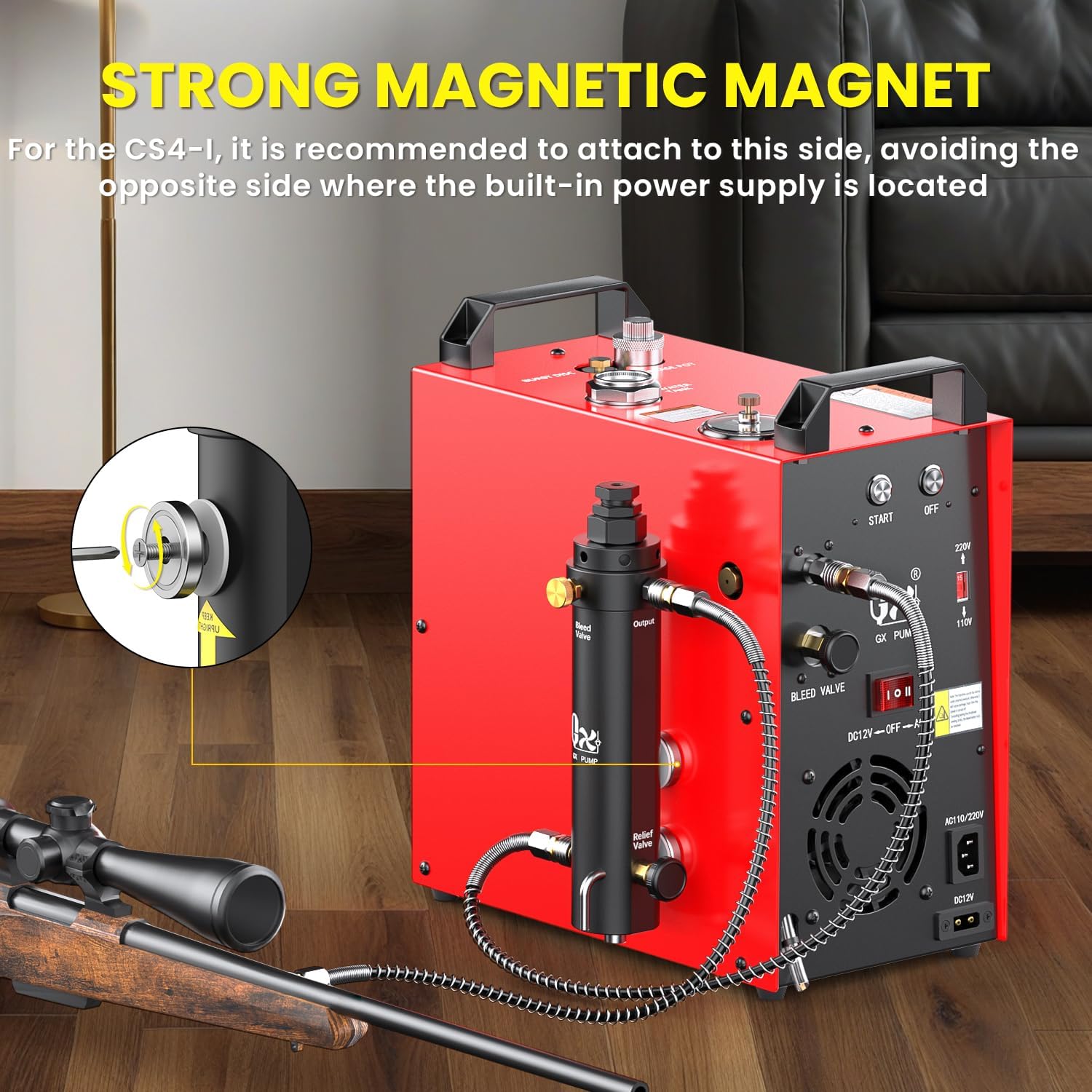
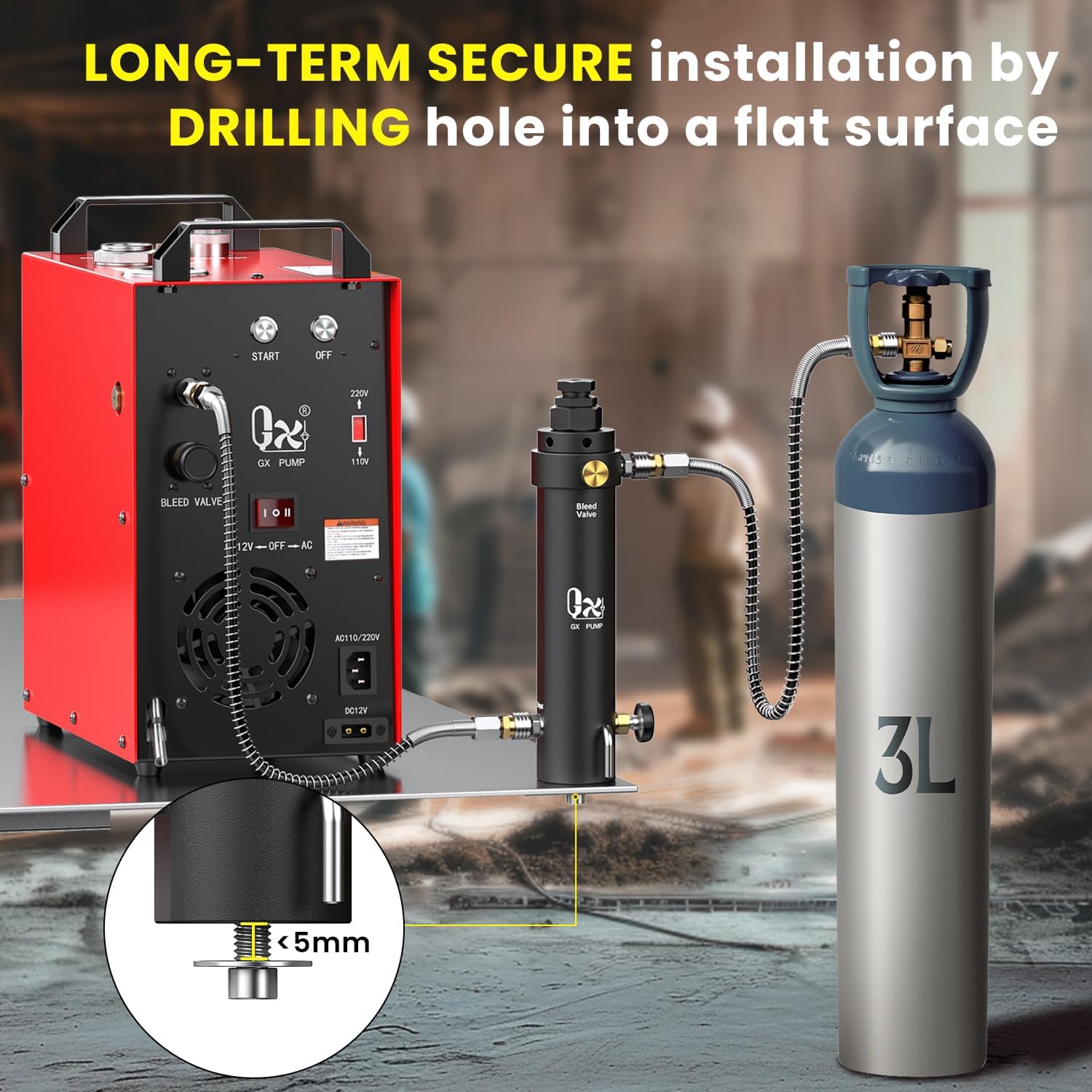
The mounting options are a nice touch. Built-in magnets let you stick it directly to the CS4-I's metal housing — no clamps, no zip ties, it just sits there. There's also a threaded hole in the base so you can bolt it to a workbench or panel for a permanent installation. Small details that show someone actually thought about how these things get used in the field.
Important: mount this vertically. The desiccant and separator work by gravity — the moisture drops down and away from the air path. Mounted horizontally, the separator doesn't function properly and you're getting partial filtration at best.
The Bleed-Back Problem — Read This Before You Fill
I get a call about this roughly once a month. Here's what happens: a large filter like this one has its own air reservoir — the housing volume between the compressor and your gun. When you finish filling and go to bleed the fill hose before disconnecting, that air has to travel back through the entire filter before the pressure drops at the fill nipple. On some airguns, the check valve in the fill nipple closes based on pressure — and if the pressure doesn't drop fast enough, the check valve doesn't lock in time. The result is the gun loses 300–500 PSI before the check valve finally closes.
This is not a defective gun. It's a physics problem caused by the volume of air in the filter reservoir bleeding slowly back through the system.
The Fix — In-Line Quick-Bleed from AirTanksPlus
We sell a product specifically designed to solve this. The In-Line Quick-Connect Air Bleeder attaches to the end of your fill whip — right where it connects to your gun. It has its own bleed valve built in, so instead of bleeding air back through the compressor and filter, you bleed right at the check valve of the gun. The pressure drop happens immediately at the nipple, the check valve locks closed at full pressure, and you don't lose a drop.
If you're running a large external filter and experiencing PSI loss at disconnect, this is the product you need. It's not a workaround — it's the correct solution.
AirTanksPlus is Roger's business. This is a direct product link, not an Amazon affiliate link.
Pros and Cons of a Large External Filter
- Significantly cleaner air than cigarette-style filters
- 5800 PSI rating — matched to CS4-I output
- Pressure compensating — consistent filtration from first fill to last
- Magnetic + threaded mount — flexible installation
- Great value at the price point
- Must mount vertically — horizontal doesn't work properly
- Extra wear on the compressor — it has to fill the filter reservoir before it starts filling your gun or tank
- Can cause PSI loss at disconnect on some guns (see bleed-back problem above — solution available)
Basic Filter Option
I'll be adding a basic cigarette-style filter recommendation for people who want a lower-cost starting point. Fair warning: you'll be changing desiccant more often and the protection level isn't as thorough — but it's better than nothing and gets the job done for light use. Check back soon.